UX Design Course
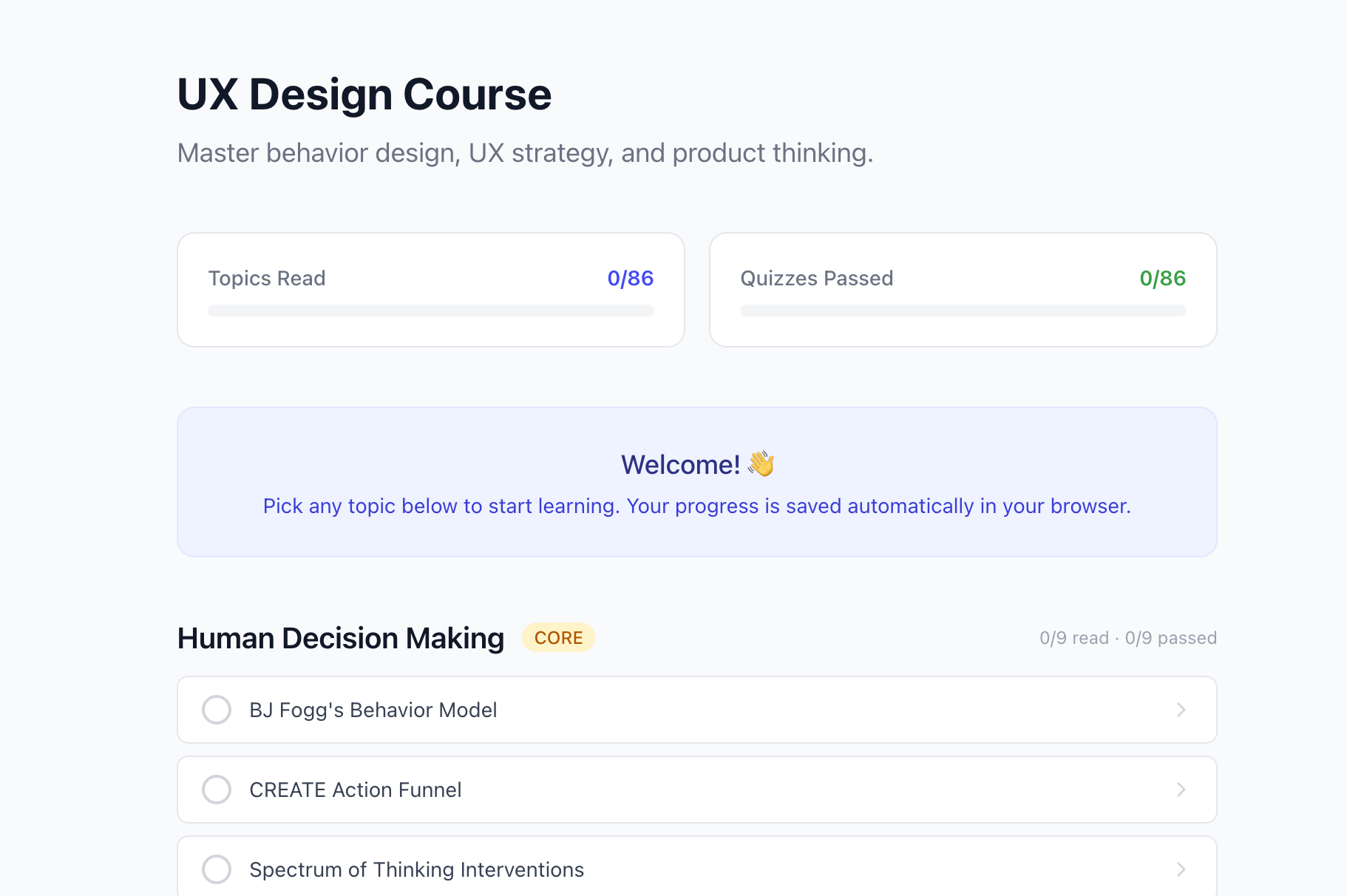
86 topics. One coherent sequence. Built in six weeks.
The best material on behavioral psychology and UX was scattered across books, conference talks, and academic papers — with no structured path connecting them. So I built one, in collaboration with Claude, which acted as curriculum co-author: mapping conceptual dependencies between topics, stress-testing module sequencing, and drafting quiz questions that actually test comprehension rather than trivia.
Organizing 86 topics into a coherent sequence required mapping conceptual dependencies — not grouping by popularity or alphabetizing, but understanding which ideas are load-bearing for others. A topic introduced before a learner has the prior context creates gaps that undermine everything after it.
I worked through the module order with Claude iteratively, treating it like a design critique: proposing a sequence, identifying where a learner would hit a gap, restructuring until the progression felt earned. The final order — human decision-making → behavior change → product understanding → design → measurement — reflects how understanding actually compounds.
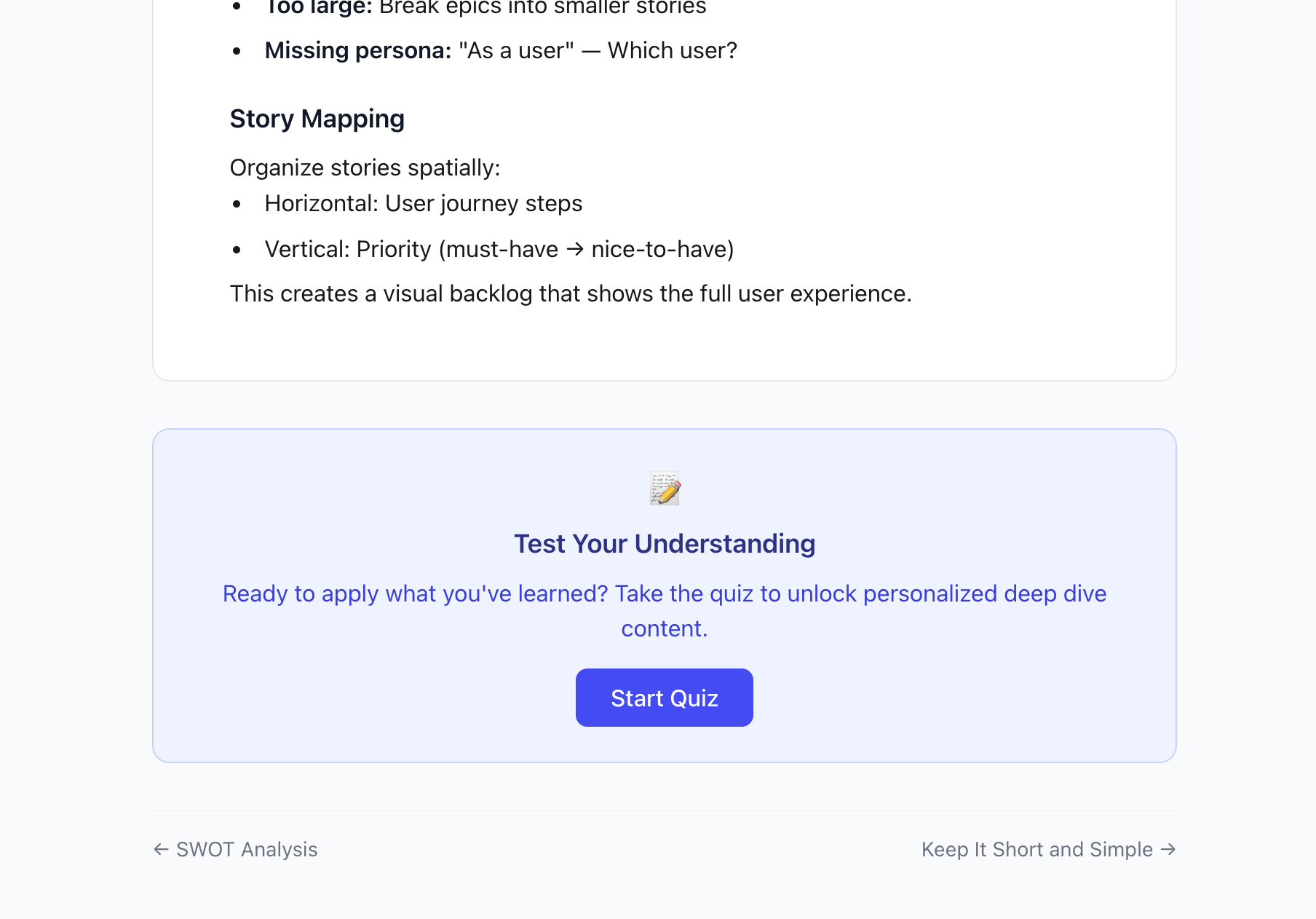
A course that's just articles is a blog. Each topic needed a mechanism to create a moment of active recall — something that moves a learner from recognizing information to retrieving it. Every topic has a 4-question quiz, tracking read and quiz-passed states independently. The distinction between having read something and understanding it is made explicit.
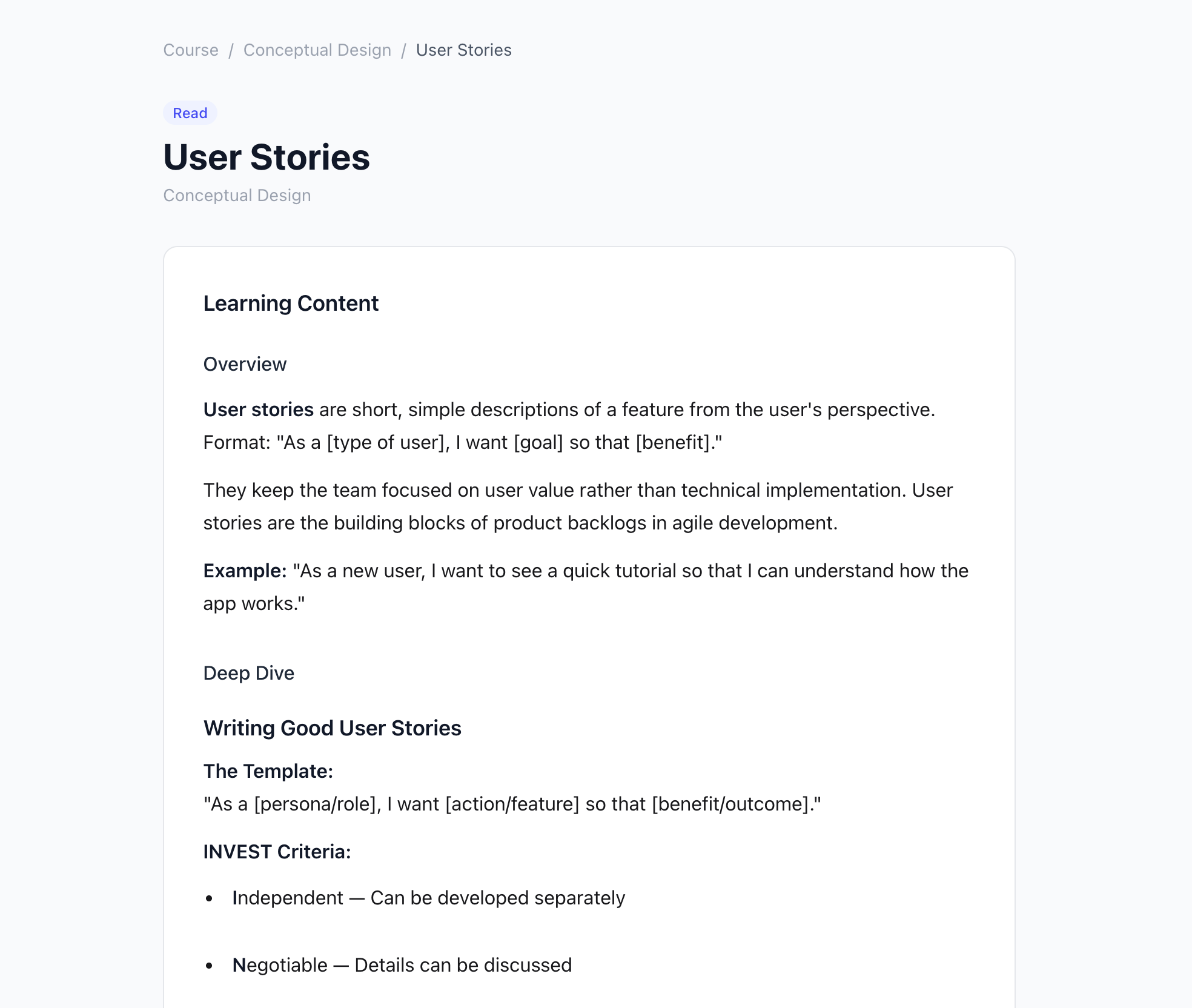
Claude drafted the initial question set for all 86 topics — questions targeted at the specific misconceptions a designer is likely to carry into each concept, not generic multiple choice. I reviewed and edited every set. 344 questions, authored collaboratively.
The direction I wanted to pursue but didn't fully build: rather than fixed questions, the model generates examples relevant to whatever product domain a user is actually working in. Fogg's Behavior Model framed around a fitness app for one learner, enterprise SaaS for another. The data shape already supports it. The gap is product decision, not technical limitation.
The course is deployed at ux-design-course.vercel.app with 86 topics, full quiz mechanics, and progress persistence. Most portfolio pieces show what you can design. This one shows how I think about the field — and how I work. Using Claude as a collaborator throughout, from curriculum sequencing to question writing to architecture decisions, is the same approach I bring to product design. The tools are new; the underlying practice of thinking carefully before building hasn't changed.